"Helping you survive the elements of the modern world and make it safely Home to the Wild."

"Helping you survive the elements of the modern world and make it safely Home to the Wild."
Showing posts with label wilderness. Show all posts

Thursday, February 4, 2016

Why Wool?

You’ve heard the advertisements, “Cotton the fabric of our lives.” But if you’ve ever spent any time with an avid hiker, or read a good outdoor living book you have surely also heard that “Cotton Kills.” As with most things you will find about the wilderness, the things you think and do back in the modern world won’t work long for you out here. So here is a little introduction to “Wool, the fabric of your Wilderness life.” So much of living in the forest centers around your fire, it’s the natural place to start.

No other cloth is as naturally flame resistant as wool. When exposed to fire, it just smolders and extinguishes itself as soon as the flame is removed. Although wool can burn under intense heat it is considered flame retardant up to 1112 Fahrenheit. That's why fire fighters wore wool uniforms and airlines use wool fabric on their seats as artificial fibers will melt and stick to skin. This has been an important consideration for me, as I spent countless cold winter nights sleeping as close to the campfire as I could possibly get.  I now have many tiny holes burnt through my wool blanket, but I never had to worry about waking up with my blanket ablaze.

I’ve used my blanket as a makeshift leanto, a dry pad to sit down in the wet snow and I’ve wrapped up in it to wait out a sudden driving rainstorm under a tree. Wool has the unique ability to be both water repellant as well as wicking moisture vapors away from your body helping to keep you warm. You see, wool has a waxy coating that beads up the water and tends to run much of it off. This coating isn’t removed by washing. At the same time the core of the fiber allows vapors to pass through, and away from you. Wool always absorbs moisture from the side of greatest humidity and releases it to the drier side creating balance. This characteristic makes wool warm in the winter and cool in the summer. As you perspire it keeps a layer of dry air next to the skin and helps to hold in body heat. If you were to fall in a stream and saturate your wool, Very interestingly the hydrogen bond of H2O is broken in a chemical reaction within the wool molecules. It will actually generate heat; increasing your chances of avoiding hypothermia! But because the air pockets caused by the crimp in the wool fiber allows moisture to evaporate from your skin, you don't overheat when you sweat. In fact wool doesn’t feel damp to the touch until it is saturated with more than 30% of its own weight and even when moderately damp, the insulating air pockets are still intact. The same wool worn for centuries by the Bedouin tribes of the desert will keep you warm in the cold; it is a great temperature regulator.

Wool fibers can be bent 30,000 times before breaking. By comparison, a cotton fiber will break after just 3,000 times. Wool also can be stretched to 1/3 of its length dry and 1/2 wet and it will spring back to its natural size and shape. It is also abrasion resistant, and naturally UV protected while cotton and synthetics break down quickly as you wear them in the sun.  Wool can be a better and longer lasting investment for your wilderness clothing. No synthetic yet has been able to combine all of these characteristics.
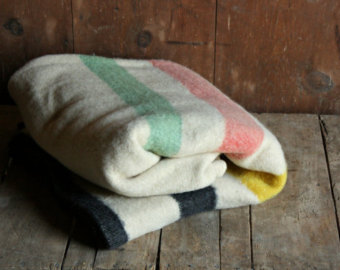
Some other considerations to someone who spends much of their time in the mud and dampness of the outdoors is that wool is mildew resistant, stain resistant, and diminishes body odor. The natural wicking that we talked about prevents much of any possible problems, but wool also has anti-microbial properties and a neutrally charged surface that makes it hard for bacteria to survive on, whereas cotton and synthetics are positively charged and will attract bacteria. Studies show that bacterial colonies are common in cotton sheets while not present on wool blankets subjected to the same environmental conditions in hospitals. The thin waxy coating that makes wool water resistant makes wool very hard to stain and easy to just brush the mud off once your clothes have dried. This is also why dyeing wool is an art in itself. In the wilderness where washing clothes can be complicated and time consuming, often just a good airing out and brushing off will freshen up wool.

And as you probably know, wool is in excellent insulator layer. It has one of the highest insulation to weight ratios of any natural or man-made material, and now new spinning techniques are producing wool fabrics that are 30% lighter than was possible before.

As an example, sheep wool has been used for house insulation and has an R-value of 3.5 to 3.8 per inch of material thickness which is 0.3 to 0.6 points higher than glasswool, cellulose, and mineral wool. The crimp of the fiber also allows the wool to retain its structure and overall thickness instead of breaking down and settling like many other insulating materials. As a carpenter it is common for me to open up a wall to find a gap of 6 inches to a foot or more where blown in insulation was used and settled over time, so sheep’s wool could help significantly with preventing heat loss and
 efficiency if it were used.

If you enjoy nature it is interesting that wool can help you in several ways if you want to get close to wildlife. “They can hear you twice, see you once, but if they smell you, they’re gone.” Minimizing human odor is key to seeing animals, and there’s no fabric better than wool. Wool absorbs 30% of its weight in moisture transporting the moisture away from the skin and completely through the fabric. Nylon absorbs only 4.5% and polyester just  .4%. With these moisture remains creating bacteria and the result is odor.


Many animals eyes are much different than ours, they see different colors and also Ultraviolet light that we can’t see. Wool absorbs light while synthetics reflect it and create a bright UV shine. Even wool blends with as little as 10% synthetic materials reflect light making you more visible. 100% wool has no reflection, and a knap that absorbs sunlight making you blend in better with natural backgrounds. And lastly, wool doesn’t flap in the wind or make a sound as you move through the forest.

Tuesday, February 2, 2016


Starting A Cabin

 
After successfully crossing the trestle we could see the two shiny rails stretching ahead, into the forest. After a quick look back to make sure I was ready, my dad took off, bumping down the rough trail right on the edge of the tracks.

The railroad is built high up on a gravel bed 15 to20 feet above the surrounding ground. A narrow trail was precariously perched between the railroad tie ends and the steep gravel bank.  There was so little room that I had to constantly watch so that I would not hit the railroad ties on one side or roll down the gravel bank on the other.

(The trail is much nicer now and is down beside the railroad as is shown in this picture above, which I took recently, much safer!)
 
Mile by mile we traveled. Riding along my head was filled with thoughts of what might lie ahead.  I was startled out of my day dreaming.  I looked up to see a large light in the middle of the railroad tracks! Where  was I to go? the train was coming! 

My dad stopped and motioned me to get over as close as possible to the edge of the bank. As I dismounted, the train was upon us. It towered over us, rushing at us with a shrill of the whistle and  burst of wind.  Waving cheerfully the engineer smiled and was gone. Then all we heard was the regular beat of the train as it rolled by just a few feet away.
 
We continued on, turning off the tracks into the forest. The trail led away from the lowlands into the foothills of the Talkeetna Mountains, toward the place I had been dreaming about for so many months.

What a different place than the white sea of snow I had experienced the winter before.  Now it was one long ribbon of mud and water interspersed with creeks.  On and on we went through unending mud puddles. It wasn't long before I was soaked to the skin.

As the trail lead deeper and deeper into the forest it became less and less traveled. The mud gave way to tree roots and the humus of the forest floor. Making the trail drier for sure, but oh so much more bumpy! 

Traveling on,  the hills became taller and the creeks larger.  Stopping for a rest my dad said that we were getting closer.  Just a couple more miles and we would be there!  He pointed out over the valley and from where we sat we could see a large swampy area about a mile away. 

This is the swamp that lay behind our place.  There was only two more stream to cross, up a short hill and then just a few more twists of the trail and we would be there!

 
I stood looking southeast over the valley. Stretching on as far as you could see were more valleys, hills and mountains. I could hardly contain myself, what a land, what a fantastic land to roam and explore!

 Impatient to move on and reach our destination we started off. The forest changed again.  Now  we traveled through a mixture of trees and open meadows.  The  grass and fireweed, 6 to 8 feet tall all around us, a perfect place for a bear to hide! 

As we climbed the last muddy hill  and crossed the last muddy stream, my excitement grew.  Then I saw a ribbon on a tree.  Even before my dad stopped to tell me that this marked our property line, I knew  I had come home.  I looked around at the forest and knew this was a place to rest, a home.

We soon found a convenient place and set to work making a temporary camp.  This camp we would use as we built our cabin.  We made a ladder of large spikes driven into a birch tree.  Then we could string a rope high in the tree, to keep our food  out of the reach of bears. 

Cutting slender spruce poles we used them to make a lean-to with tarps.  It would give us a dry place to cook, eat and rest besides the tent.   After the lean-to was built we set up the tent.  

By that time I was starving!   finally after building a roaring fire and hanging my wet cloths to dry it was time to eat!

Sitting down by the fire after a long, cold wet day I was ready to soak up the warmth and rest. 

The next few days were filled with rain and work cutting trees, putting joists on the floor and getting ready for the plywood flooring.  Finally it was the last soggy evening.  It was time to pack up and head home. 

Unknown to us the streams we had crossed a few days before with ease, had become raging torrents.


Sunday, January 31, 2016


Our First Summer Trips

Back at school the days passed, turning into weeks.   The weeks turned into months, and still we were not able to make another trip to look for land.  March rolled around, my dad was again working long hours, and the opportunity for us to go back into the wilderness slipped away.
 
As the deadline for filing on the land grew closer I wondered if we would ever be able to realize this dream?   Our friend decided he was going to try another trip. Now that spring was beginning the snow would be hard and fast from thawing in the daytime and freezing at night.  He felt he could make a quick day trip, find and stake the land.

It was arranged that my brother would go this time with our friend on a Sunday and they would search for land

Loading up before dawn and heading out,  they decided on an amount of time to travel before stopping and staking land.
 
Approaching the time deadline, they found themselves on a hill overlooking a valley with streams, low ridges and beaver ponds.  Beyond that, the valley dipped further down into Clear Creek, with the foothills of the Talkeetna Mountains rising up in the background.

Deciding this was the valley, they headed down to stake the land.  This would become the place of so many memories.   The one place on this planet that I have really felt was home.

Spring turned to summer. We had acquired the land.  The dream had really come true!   My dad had made a short weekend trip out to see the land and find a suitable place to build a cabin. I could barely contain my eagerness to see the land.  

 
 My father, being a contractor had to work hard during the busy summer season and had little time off for trips to the wilderness.  As the summer dragged by, I had to busy myself with summer jobs, summer camp, hikes into the mountains and along the rivers near our home in Palmer. 

Towards the later part of the summer my excitement mounted as my dad was able to get some time off.  Enthusiastically we planned a trip out to the land. 

 Again we loaded our supplies and machines.  Being summer, we took our three wheeler, four wheeler and a trailer.  Now the work on our cabin could begin.

 Once again we were off on an adventure into that wild country  I had been dreaming about for months.

This time I would be on my own machine!  My dad would be on the four wheeler hauling a trailer with our supplies and equipment we would need for the trip. I would be riding the three wheeler.

 With great anticipation we loaded the four wheeler and tied down the cargo on the front and back racks, hitched up the trailer and started our machines. 

On our way again!
 
Crossing the railroad bridge, I looked down, once again into that swirling cold river below.  Even in the summer the icy water could send a chill through me just watching it swirl by.

Friday, January 29, 2016


Why Home to the Wild?


What would make a person want to leave the comforts and conveniences of modern life to live in a place without what we consider the basic necessities of life?  Who would want to live without conveniences like running water, electricity, grocery stores, TV, a bathroom and a car? 

  How can one explain the deep quiet of the northern forest wrapped in snow?  Or the incredible sharpness of everything as the sun is slanting across that same landscape at 25  degrees below zero. Where every twig and needle is on fire from the light and you hardly want to breathe for the beauty, that almost defies reality.

 Could it be the draw of a life, away from the overwhelming complexity that our modern society heaps on us?  Maybe there is a longing deep inside some of us for a life where things are clearer where life is more stark... more real.

Maybe the virtual reality that we have created for ourselves is not real enough for some of us. Maybe we need to touch the earth, to feel and hear the wood burning that heats our homes, to grow and harvest the food that feeds us. Maybe some of us need to shape the dwelling that protects us.

Maybe it's not enough for some to just park in a building somebody else built, maybe some need to know and to understand, maybe some need to feel the biting cold and the warm rush of air as we come in from that cold.  Maybe the tepidity of our modern, climate controlled, comfort ensured lives is just more mediocrity then some can take! 

 Maybe some need to feel the extremes, to touch the sky, to really live! 

 These are the ideas and thoughts that swirl through my mind as I try and figure out why I have always been drawn to the wilderness. Why it has been such a reoccurring theme throughout my life.   This desire to live in the wilderness, through all the years and miles, has never gone away.  The desire to live away from the modern conveniences surrounded by the ruggedness and hardships of the wilderness have only deepened with time. 

 How is it that one can find peace and security in an environment that most view with at least some level of mistrust and fear?

 I will document here our family’s  move from where we are, to a life in the wilderness.  Where, at the age of 14 or 15, I knew I wanted to live.  

 How has it taken 30 years to come to this place? How will we make it happen? 

 I hope this story can help those who want to simplify or to live in the wilderness to begin their own journey.  To give them courage to swim against the current of modern societal norms.  I hope this story will not only provide those who have no desire to live that life an interesting story but, a deeper understanding of those who do want to live in the wilderness.

So how do you go about moving to the wilderness, is it really a place you would want to take your family and what does it take to make the change?

 Stick with me for a while hopefully as this story unfolds we will all learn the answers to these questions! 


Monday, January 25, 2016

The Tree that Shaped the Future of Canada


 The year was 1535 and it was Jacques Cartier’s second trip to the New World. His crew of 112 sailors had been at sea for months when they finally sighted land, it was land that the Natives called Kanata, meaning “village” or “settlement.” From this time on the French explorer would refer to this territory as Canada. 

Cartier sailed his ships up the St. Lawrence River in search of gold, silver, copper and spices that the Iroquois was said to have assured him lay farther to the west, until winter forced him to anchor his ships and build shelters.

For 5 months his ships lay frozen and immobile in the ice, and over a period of several weeks all of his men but 3 began to come down with a strange and deadly disease, as did their neighbors the local Stadacona tribe.

Those afflicted would have blotches on their skin, swollen and bloody gums, an incredibly weakness and depression and finally paralysis and death. Until one day a he noticed a healthy looking Stadacona native coming to visit their settlement to trade, a man that he happened to remember had been sick with the strange plague just 3 days before. 

Jacques had lost 25 men by now and he was desperate, he asked the man how it was that he could be walking around healthy while none of his own men had shown any signs of recovery, and he was shown a tree called Anneda. There is conflicting ideas of whether this was the Cedar tree or White Pine, but for our purposes you will see it really doesn’t matter. The sailors stripped the tree bare of needles in 6 days as they made a tea that in a very short time had cured all of Cartier’s men and allowed them to leave Canada in May. 

What the men had was Scurvy and their cure was Pine tea, or rather the vitamins that are so abundant in Pine tea. A cup of Pine tea has 4 or 5 times as much vitamin C as a glass of orange juice! It is also packed with vitamin A and other antioxidants. I have heard stories of refugees fleeing through the mountains who survived for 2 months on Pine tea, so it is definitely something to keep in mind as you wander your own wilderness. It also makes a great antiseptic wash and effective decongestant.

All you need to do is break or cut up your needles and steep them in hot water for a few minutes, and it will make a refreshing drink. Most trees in the pine family can be used and are completely safe, including Hemlock (the tree, NOT the plant!) Spruce, and Cedar. Each tea will have its own distinct and different flavor, and everyone is delicious. My personal favorites are the White Pine which is delicate and almost sweet, and the Cedar which smells and tastes much stronger and is amazing! The Cedar seems to me to be especially good as a decongestant.

But as with all things there are a few that you should be aware of, do not use the Ponderosa Pine, the Norfolk Island Pine, or the Yew as they can be poisonous and should not be used for tea. Also pregnant women should not drink Pine tea. Be sure you always do your own study from a trustworthy source as you learn about wild edibles, but being aware doesn’t have to mean avoiding wild foods all together as so many do.

 A good example is that Potatoes, tomatoes, peppers, eggplant, pimentos, and paprika are all in the nightshade family.  A group of alkaloids in these foods can impact nerve, muscle and digestive function, and may also destroy joint function. But these alkaloids are mostly concentrated in the plant and not the fruits so they have become among the most common of foods among the different cultures of the world. So learn to be aware of the dangers around you, but to not let that fear keep you from enjoying and finding your own Home in the Wilderness.